
How long does tennis elbow take to heal?

Medically reviewed by
Dr. Saurabh Dang, MD, MBA
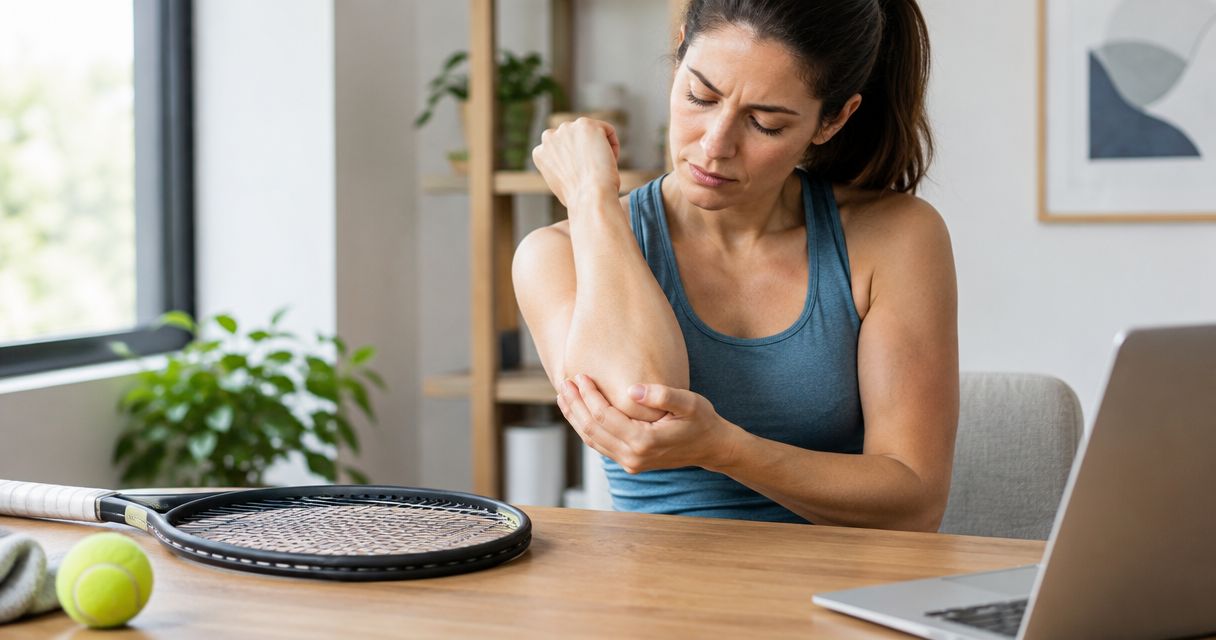
Tennis elbow often takes months to settle, and full recovery can take 6 months to 2 years, according to NHS patient guidance. Feeling less pain does not mean the tendon is ready for unrestricted lifting, gripping, or racket sports; your return should depend on improving strength and tolerance, not a calendar deadline.
TL;DR
- How long does tennis elbow take to heal? NHS guidance gives a recovery window of 6 months to 2 years.
- Tennis elbow recovery requires reducing aggravating loads while gradually rebuilding forearm strength.
- Pain relief is not proof that a tendon has regained its capacity for heavy gripping.
- Persistent weakness, numbness, or a swollen elbow needs assessment rather than a longer self-treatment plan.
Why this matters
A long recovery window does not mean you must stop using your arm until every symptom disappears. It means you need to separate comfortable movement from repeated overload. Resting completely, then returning immediately to your usual workload, does not rebuild the capacity your elbow needs.
For 2026 recovery planning, focus on function: whether you can carry groceries, use tools, and complete work without a worsening flare afterward. The guide to treating tennis elbow and golfer’s elbow pain explains the treatment side; this page explains how to judge recovery and when to seek another assessment.
How long does tennis elbow take to heal?
NHS patient guidance describes tennis elbow as usually lasting between 6 months and 2 years. That is a broad natural-history window, not a prediction for your elbow or a reason to postpone treatment. Symptoms, daily demands, and the accuracy of the diagnosis all affect your recovery plan.
Use the following milestones to discuss progress with your clinician. They describe stages of function, not fixed deadlines.
| Recovery milestone | What improvement looks like | What it does not prove |
|---|---|---|
| Comfortable daily movement | Dressing and light household tasks cause less discomfort | Heavy gripping is safe |
| Better load tolerance | You can complete prescribed exercises without a sustained flare | Your usual sport volume is appropriate |
| Return to demanding activity | Work or sport becomes manageable through gradual progression | Recurrence is impossible |
Tennis elbow, also called lateral elbow tendinopathy, affects the tendon attachment on the outside of the elbow. Repeated gripping and wrist extension load this area. Despite the name, you do not need to play tennis to develop it.
The most useful question in 2026 is not simply whether the elbow still hurts. Ask whether the same task is becoming easier, whether your grip is improving, and whether symptoms settle after activity rather than building across successive days.
Early improvement: weeks, not a guaranteed finish date
You can notice improvement before the condition has fully resolved. Reducing forceful gripping, adjusting your workstation, and following an appropriate exercise plan can make ordinary tasks more comfortable. That early change is useful, but it is not a clearance test for heavy lifting.
Best for tracking early progress: repeatable daily tasks. Choose familiar activities, such as lifting a mug or opening a door, and notice whether they become easier. Do not repeatedly squeeze hard or provoke pain just to check whether the injury is still there.
A sudden good day also does not cancel a longer pattern. If you use that day to catch up on every postponed chore, you can exceed the elbow’s current capacity and trigger another flare.
Full recovery: 6 months to 2 years is a planning window
The 6 months to 2 years described by NHS guidance includes a wide range of recovery experiences. It does not mean everyone needs prolonged treatment, and it does not mean persistent symptoms should go unexamined until that window ends.
A practical recovery target is the ability to perform your normal tasks with manageable symptoms, adequate strength, and no sustained worsening afterward. Your clinician or physical therapist can assess these areas and set demands that match your job or sport.
For your 2026 treatment plan, distinguish between symptom control and rehabilitation. A brace or medication can make activity more comfortable, but it does not replace the gradual rebuilding of tendon load tolerance. Likewise, an exercise program needs adjustment when it repeatedly causes worsening symptoms rather than progress.
Why tennis elbow recovery varies
Several factors affect how easily you can reduce irritation and rebuild strength. These are useful discussion points, not a formula that predicts a healing date.
- Daily load: Repeated gripping, lifting with the palm down, and forceful wrist movements can keep provoking symptoms.
- Work demands: A desk worker and someone using heavy hand tools face different challenges when modifying activity.
- Exercise progression: Exercises that are too demanding can aggravate symptoms; exercises that never progress do not prepare you for harder tasks.
- Return-to-sport demands: Racket sports, climbing, and weight training require different combinations of grip, repetition, and force.
- The diagnosis: Nerve irritation, joint problems, or another injury can resemble or accompany tennis elbow and require a different plan.
You cannot control every factor, but you can identify the activities that repeatedly produce a flare. Bring those details to your appointment rather than reporting only that the elbow still hurts.
Which treatments help you recover?
Start with load management and a clinician-guided rehabilitation plan. Treatment should help you function while addressing the demands that keep irritating the elbow. No treatment should be presented as a guaranteed shortcut to tendon healing.
| Approach | Best for | Main benefit | Limitation or risk |
|---|---|---|---|
| Activity modification | People with identifiable aggravating tasks | Reduces repeated irritation | Complete avoidance does not rebuild strength |
| Progressive exercise | People rebuilding grip and forearm capacity | Prepares the arm for increasing demands | Progression needs adjustment if symptoms worsen |
| Counterforce strap or wrist support | Selected patients needing help during tasks | Can reduce symptoms during use | Does not establish that the tendon has healed |
| Pain-relieving medication | Selected patients needing symptom control | Can make daily activity more manageable | Side effects and medical conditions limit suitability |
| Corticosteroid injection | Selected patients after an individualized discussion | Can provide short-term pain relief | Relief is not tendon repair; recurrence and tendon risks matter |
Activity modification without complete shutdown
Reduce the tasks that reliably provoke symptoms while keeping comfortable movement. Use both hands for suitable lifting tasks, reduce unnecessary grip force, and change how you handle tools when practical. Ask about modified duties if your job makes these changes difficult.
Avoid treating all discomfort as evidence of new damage. At the same time, do not push through escalating pain or loss of function. A clinician can help define an acceptable response for your situation.
Progressive exercise rather than a fixed internet routine
Rehabilitation commonly includes forearm strengthening and a gradual return to gripping tasks. The appropriate starting resistance depends on your symptoms, examination, and activity demands. Copying another person’s exercise dose can make the program either too easy or too irritating.
Stretching alone does not prepare your elbow for demanding work. Ask how the program will progress from comfortable exercise to the specific activity you want to resume.
Supports and medication as supporting measures
A counterforce strap or wrist support can help selected patients with symptoms during activity. Fit and placement matter. Stop using a support that causes numbness, skin irritation, or increased pain, and have it checked.
Medication decisions should account for your other prescriptions and health conditions. Anti-inflammatory medicines are not appropriate for everyone, particularly people with certain kidney, stomach, heart, or bleeding risks. Ask a clinician or pharmacist before using them regularly.
Injections require a benefit-and-risk discussion
An injection is not automatic treatment for a slow recovery. Corticosteroid injections can provide short-term relief, but they do not reliably improve long-term recovery and can carry tendon-related risks. Repeated injections deserve particular caution.
Ask what an injection is intended to accomplish, what evidence supports it for your diagnosis, and how rehabilitation will continue afterward. Less pain should not become permission to return immediately to the activity that caused the problem.
How do you return to lifting, work, or tennis?
Return through increasing demands rather than a single all-clear day. Your starting point should reflect what the elbow currently tolerates, and your progression should reflect the task you need to perform.
- Reduce irritation. Identify the grips, lifts, or work tasks that repeatedly aggravate the elbow and modify them.
- Build strength. Follow the prescribed forearm and grip exercises, adjusting resistance with your clinician or therapist.
- Practice tasks. Reintroduce a manageable version of the movement, such as lighter lifting or a shorter practice session.
- Review response. Check whether symptoms settle after activity or remain worse before increasing the demand again.
This sequence helps distinguish progress from simply enduring more pain. Increase demands because your elbow tolerates them, not because a planned return date has arrived.
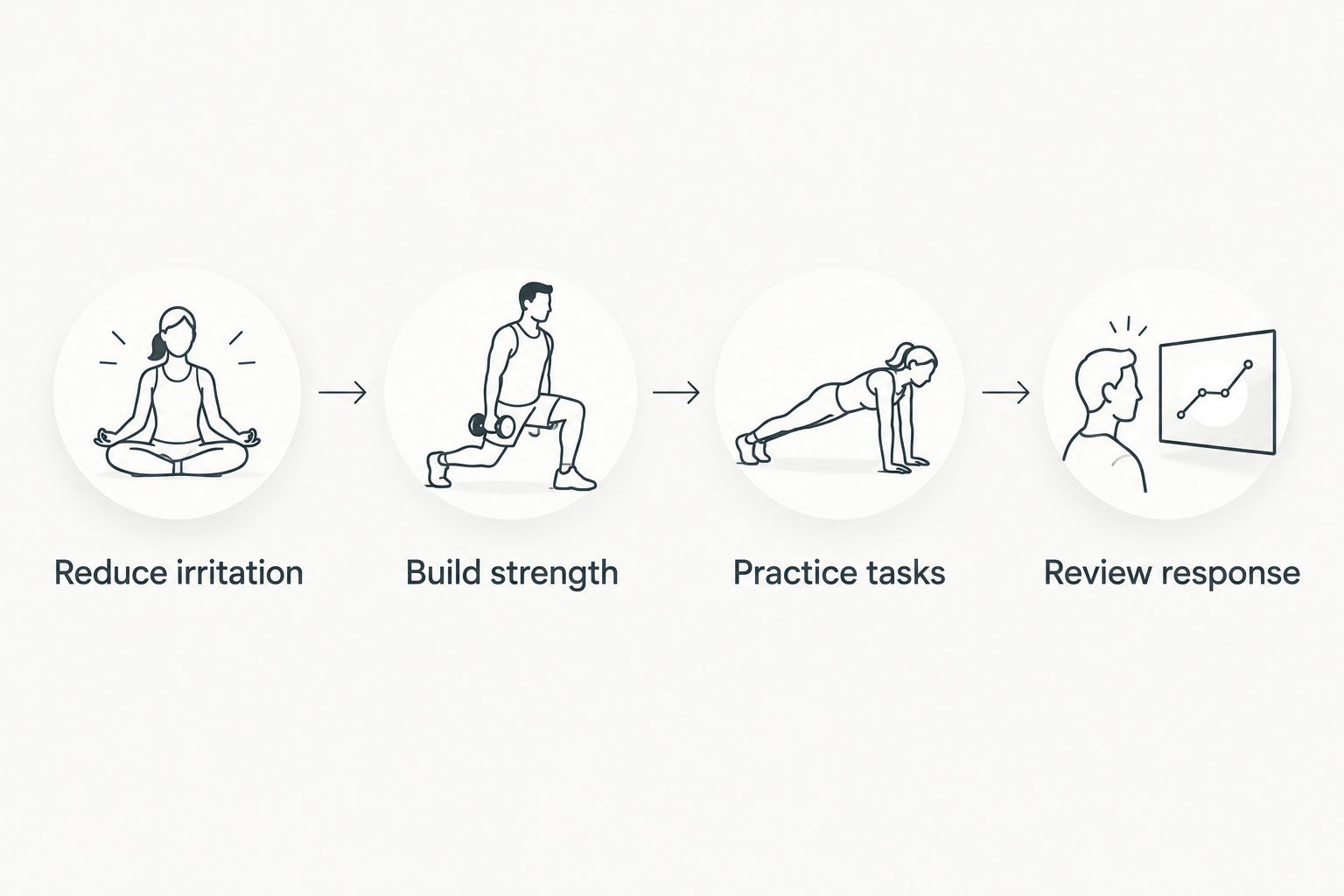
Progress according to your response to activity, not a fixed return date.
For racket sports, discuss technique, equipment, and training volume with an appropriate professional. For manual work, discuss modified tools or duties. The goal is to make the next demand manageable rather than repeatedly testing your maximum.
Can tennis elbow heal without an injection?
The 6 months to 2 years recovery window does not imply that an injection is necessary. Many cases improve with nonsurgical care, including activity changes and rehabilitation. The decision to consider a procedure should follow an examination and a discussion of what has already been tried.
Does pain relief mean my tennis elbow has healed?
The 6 months to 2 years window describes recovery, not continuous severe pain. Symptoms can improve before your arm tolerates demanding activity. Judge readiness by strength, task performance, and your response afterward, rather than pain relief alone.
When should persistent elbow pain be reassessed?
Do not wait 6 months to 2 years to seek help for worsening or unexplained symptoms. Arrange an assessment if pain interferes with sleep or work, grip is deteriorating, or a reasonable treatment plan is not producing progress. Numbness and tingling also deserve evaluation because they are not typical features of isolated tennis elbow.
Seek prompt medical care for a hot, red, swollen elbow, especially with fever. Significant trauma, deformity, sudden loss of movement, or rapidly developing weakness also needs urgent assessment rather than home exercise.
What should you expect from a specialist evaluation?
An evaluation should connect the location of your pain with the movements that provoke it. Your clinician can examine the elbow, wrist, neck, sensation, and strength, then decide whether imaging or another test would change treatment. Imaging is not automatically necessary for every case.
Hudson Pain and Spine is best suited to New Jersey patients seeking specialist pain management for persistent musculoskeletal symptoms. The practice provides board-certified interventional pain management from offices in Englewood, Woodland Park, and Edison. Its role is specialist evaluation and treatment planning, not a guaranteed tendon-healing date.
Bring your symptom history, previous treatment details, and the tasks you cannot comfortably perform to Hudson Pain and Spine. For a 2026 consultation, a useful question is: what finding supports this diagnosis, and what functional improvement should trigger the next step?
Plan your next evaluation
Discuss persistent pain, previous treatment, and the activities you need to resume.
FAQ
How long does tennis elbow take to heal completely?
Tennis elbow can take 6 months to 2 years to resolve, according to NHS patient guidance. Your own recovery should be assessed through symptoms, strength, and tolerance of normal activities rather than a promised finish date.
Can I keep working with tennis elbow?
You can often continue working with appropriate task modifications. Repeated forceful gripping or lifting that keeps worsening symptoms needs adjustment, and some jobs require temporary modified duties.
Should I rest my elbow completely?
Complete rest is not usually the goal of tennis elbow rehabilitation. Reduce aggravating loads while maintaining comfortable movement and following an appropriate strengthening plan.
Can I lift weights while recovering from tennis elbow?
Weight training needs modification when gripping or wrist loading provokes elbow pain. A clinician or physical therapist can help you choose tolerable movements and rebuild resistance gradually.
Is a steroid injection the fastest way to heal tennis elbow?
A steroid injection can reduce pain in the short term, but pain relief is not the same as tendon healing. Long-term benefit, recurrence, and tendon-related risks need discussion before treatment.
Does numbness in my fingers mean I have tennis elbow?
Finger numbness is not typical of isolated tennis elbow. Nerve irritation or another condition needs consideration, especially when tingling accompanies weakness or persistent arm pain.
Can Hudson Pain and Spine tell me exactly when my elbow will heal?
Hudson Pain and Spine can evaluate persistent pain and discuss an individualized treatment plan, but an exact healing date cannot be guaranteed. The examination and your response to treatment help guide the next step.
One last thing
A comfortable elbow at rest is not the same as an elbow ready for demanding activity. Before ending rehabilitation, ask whether your plan has prepared you for your actual work, lifting, or sport. That is a more useful recovery target in 2026 than reaching a date while avoiding every difficult task.
Related guides
- Pain management for pickleball players with joint injuries
- Connecting physical therapy to interventional pain treatment
- When to see a pain management specialist for chronic pain
About the Medical Reviewer
Dr. Saurabh Dang is a double board-certified interventional pain management specialist serving Central and Northern New Jersey. He combines clinical expertise with a patient-centered approach to help patients find lasting relief from chronic pain conditions.
Read Full Bio →Seeking Treatment for Chronic Pain?
Dr. Dang and the team at Hudson Pain and Spine offer specialized care and advanced interventional treatments.
Ready to Find Relief from Pain?
Schedule your consultation with Dr. Saurabh Dang at our Englewood office.
Serving patients across Central and Northern New Jersey — Bergen, Passaic, and Middlesex counties.